
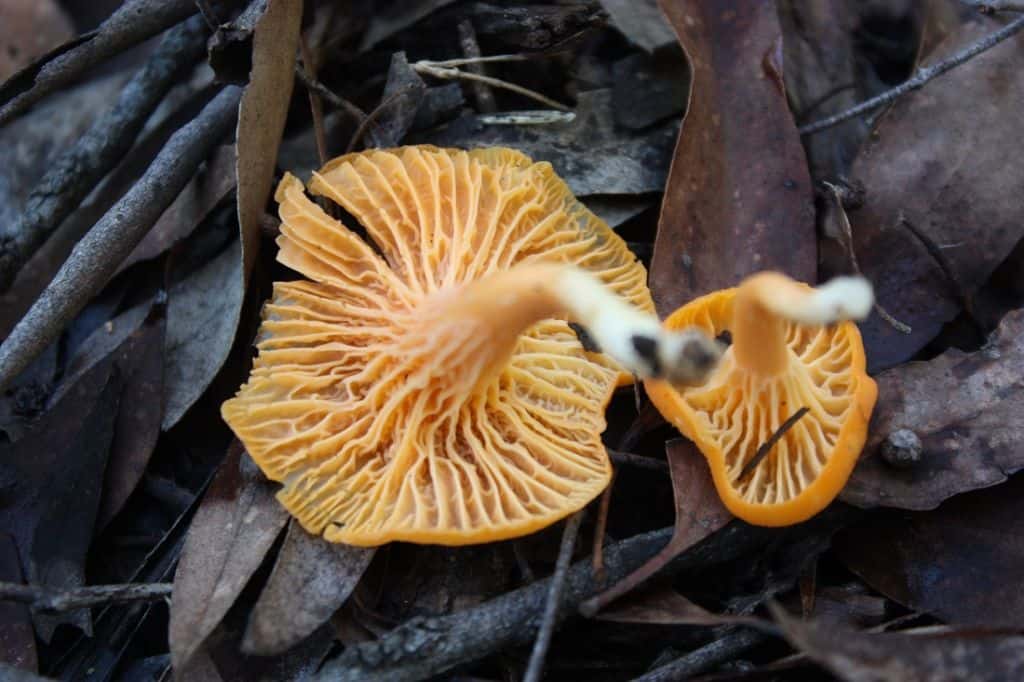
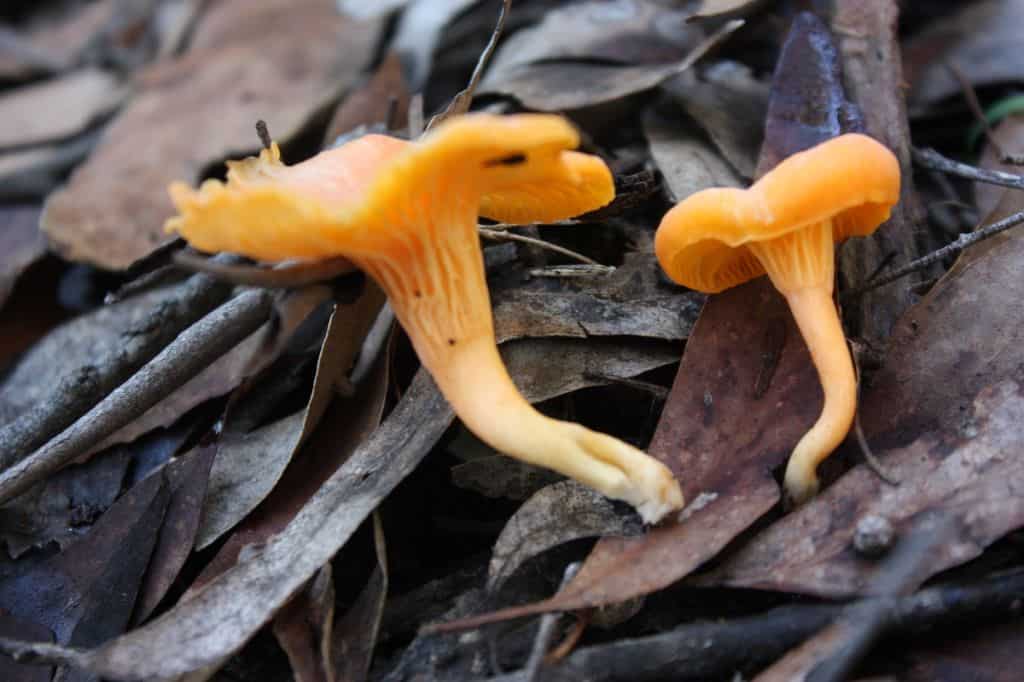
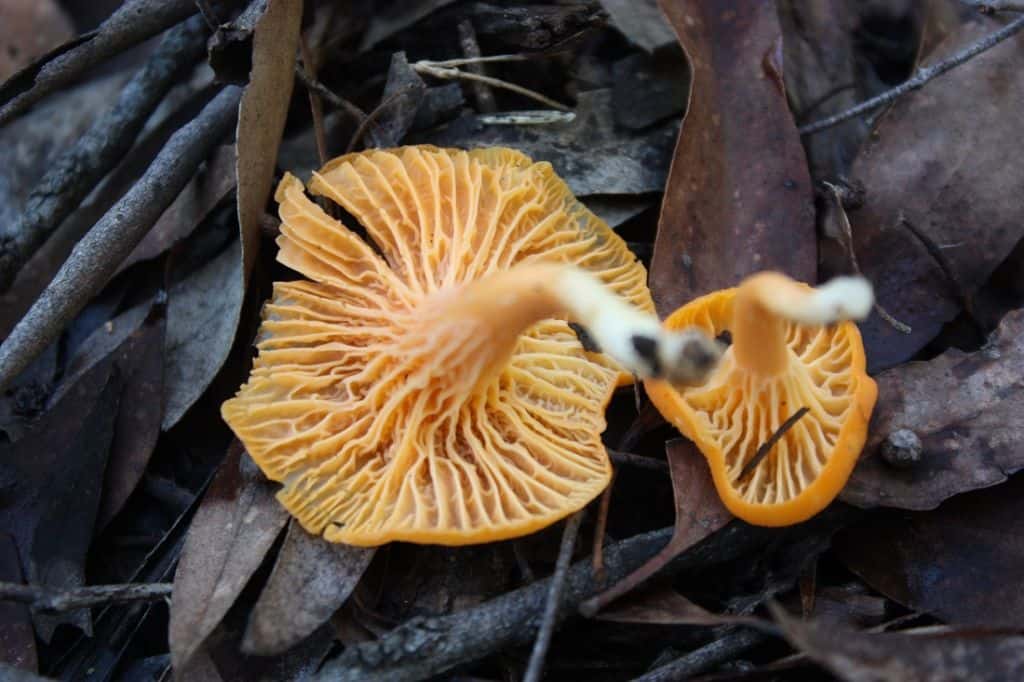
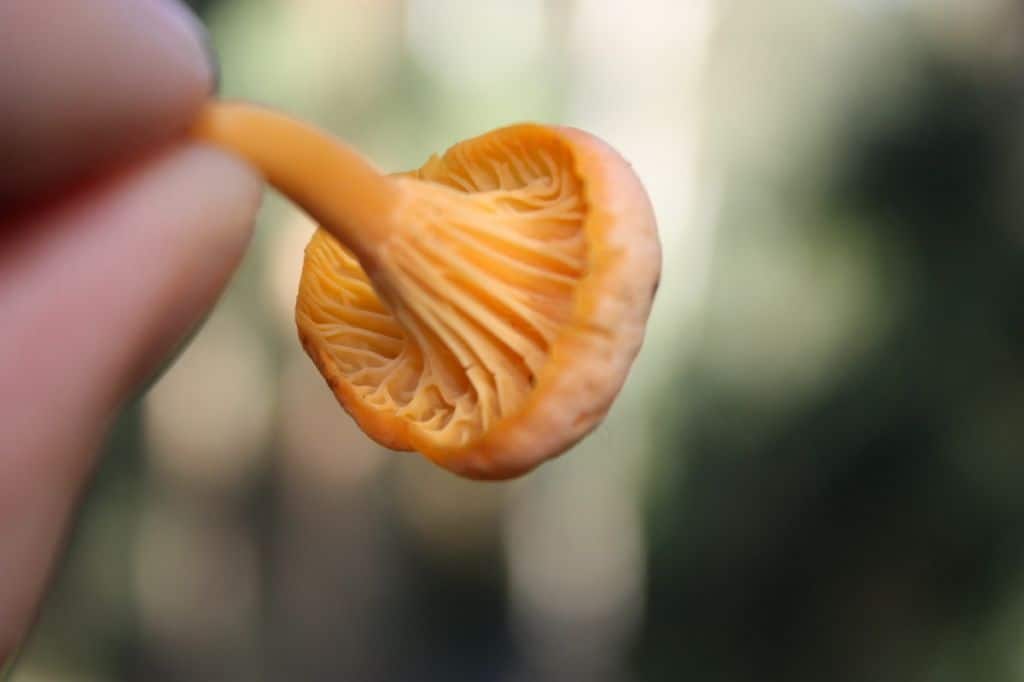
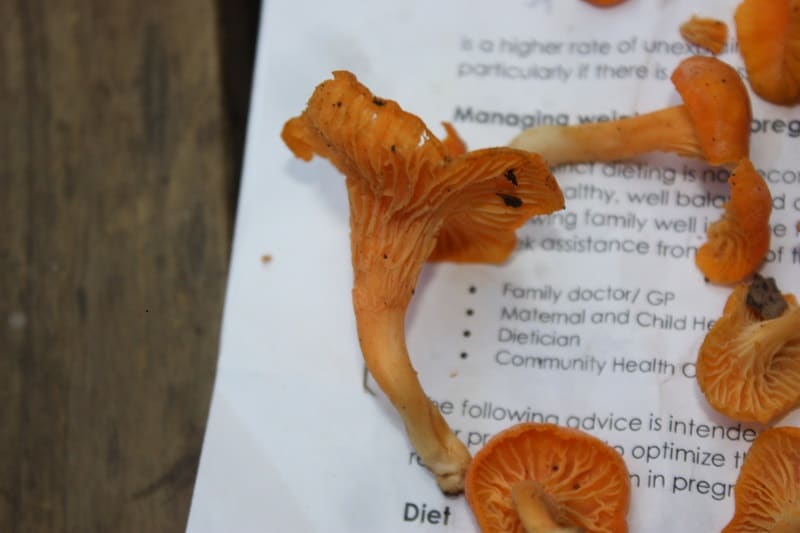
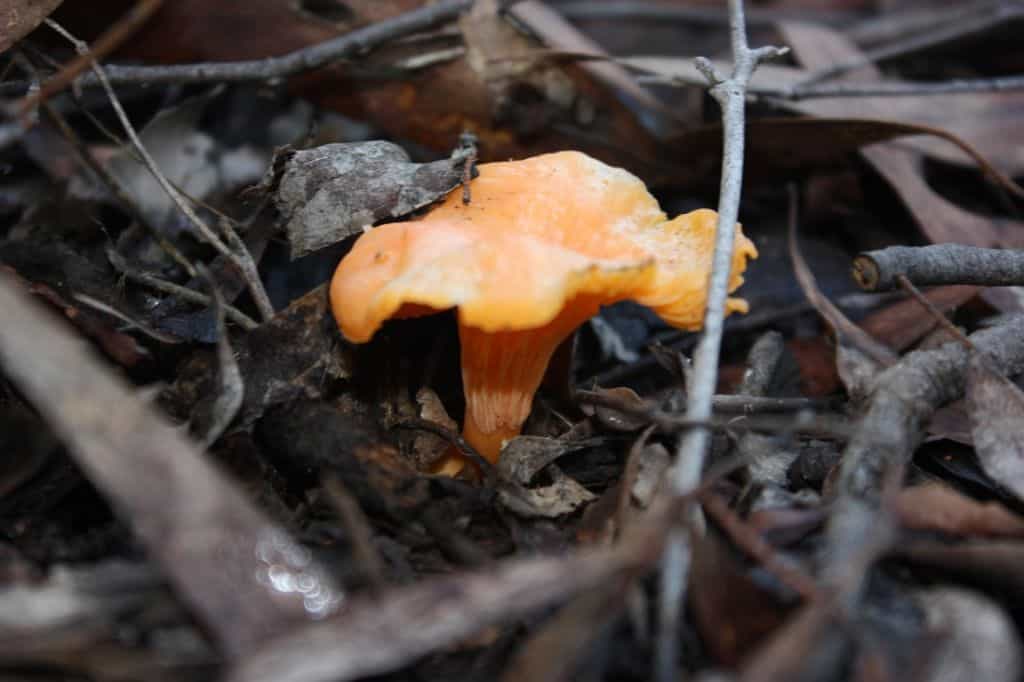
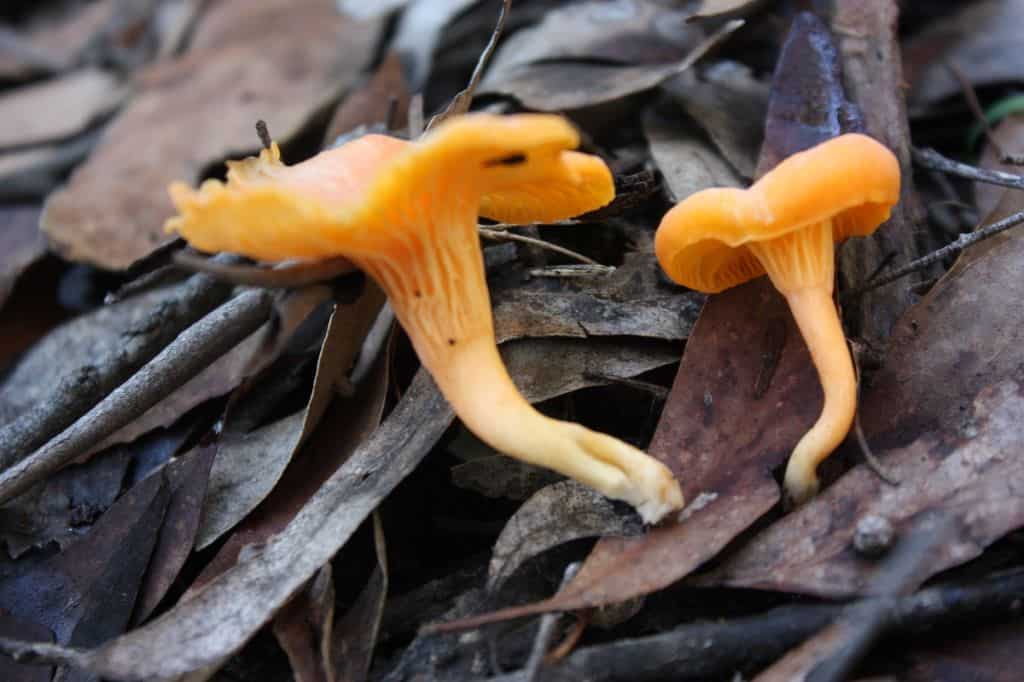
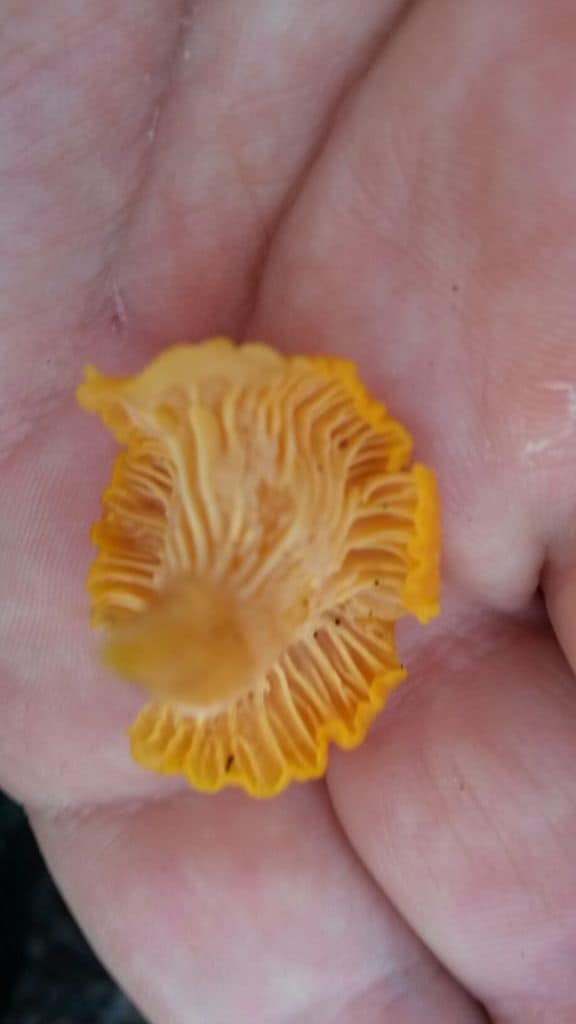
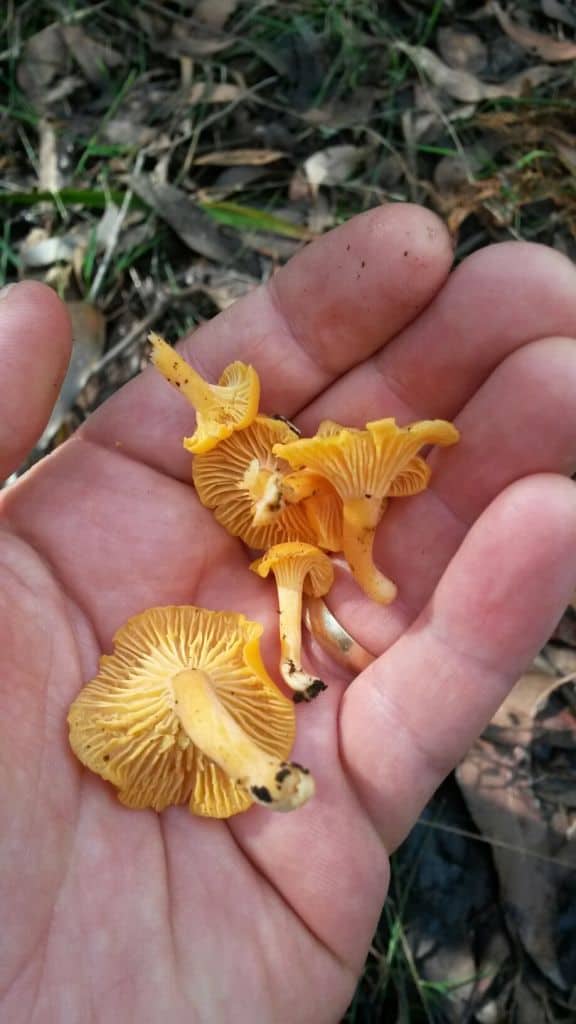
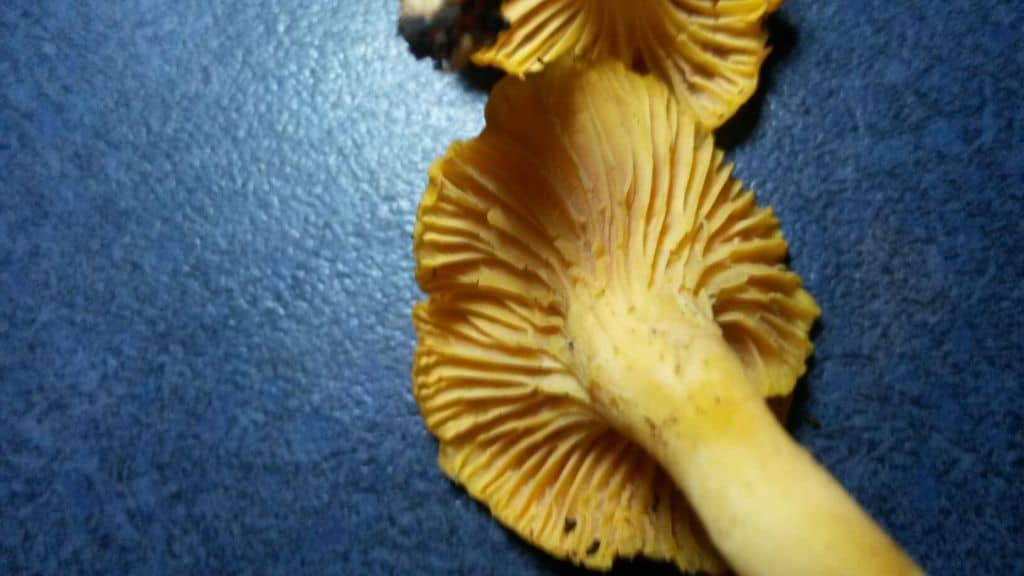
 The most common Chanterelle species in the Dandenongs and wide Yarra ranges is the petite orange to pink Cantharellus concinnus.
The concept of concinnus has likely been applied to multiple species with potentially very different characteristics ranging from SE Queensland down to Tasmania and across to WA. In fact a recent review of some websites designed to capture reports of flora and fauna record overtly different species as concinnus which probably adds to the confusion.
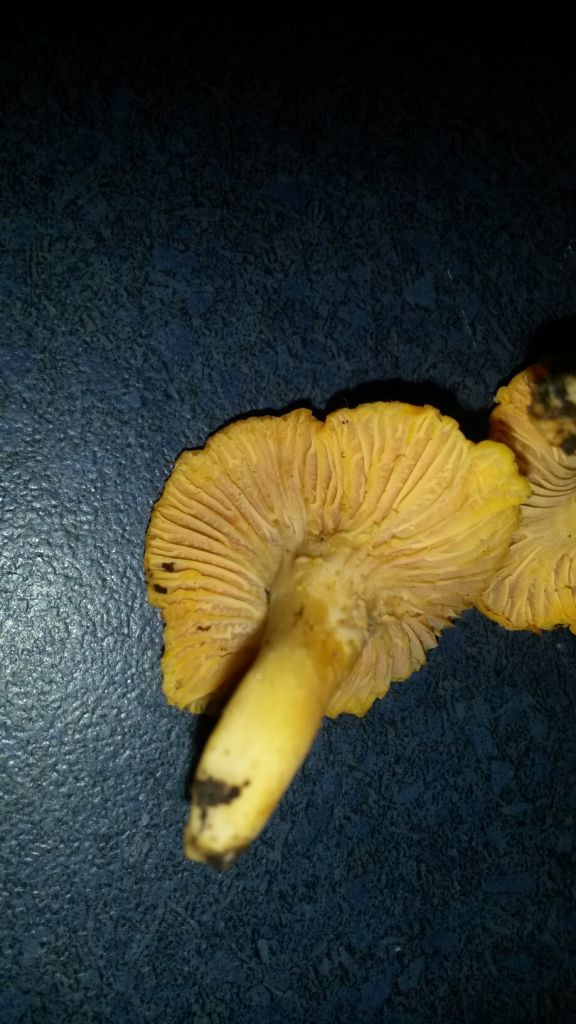
Phenotypes include fairly pink and orange varieties in WA to our yellow orange ones here in Victoria and Tasmania to varieties up in NNSW and SEQ that appear to be quite petite but are reported has having a strong flavour and scent (unlike those in Victoria):
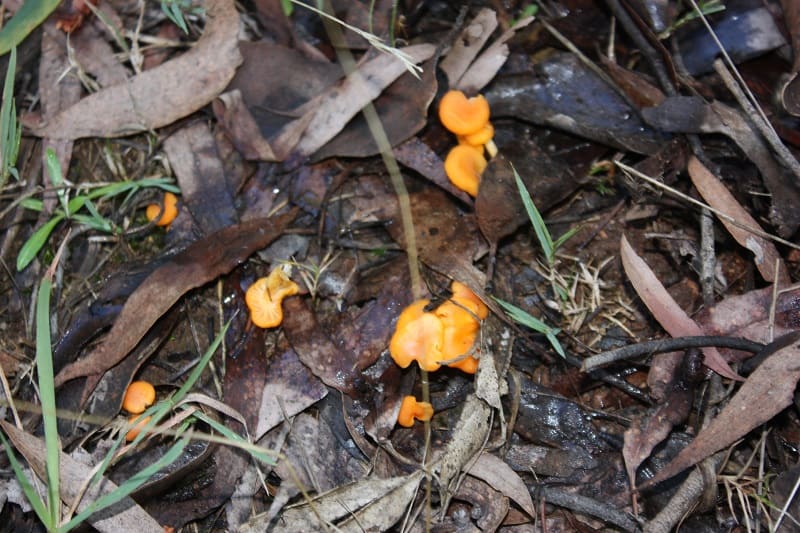
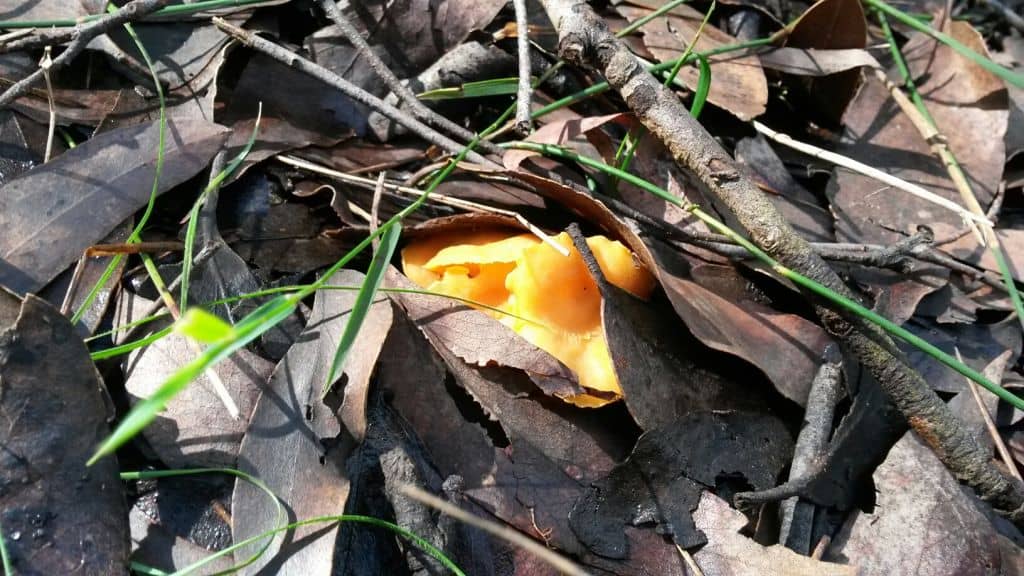
The Victorian variety generally occurs in Messmate Stringybark forest and occasionally under Casuarina.
The most common Chanterelle species in the Dandenongs and wide Yarra ranges is the petite orange to pink Cantharellus concinnus.
The concept of concinnus has likely been applied to multiple species with potentially very different characteristics ranging from SE Queensland down to Tasmania and across to WA. In fact a recent review of some websites designed to capture reports of flora and fauna record overtly different species as concinnus which probably adds to the confusion.
Phenotypes include fairly pink and orange varieties in WA to our yellow orange ones here in Victoria and Tasmania to varieties up in NNSW and SEQ that appear to be quite petite but are reported has having a strong flavour and scent (unlike those in Victoria):
The Victorian variety generally occurs in Messmate Stringybark forest and occasionally under Casuarina.
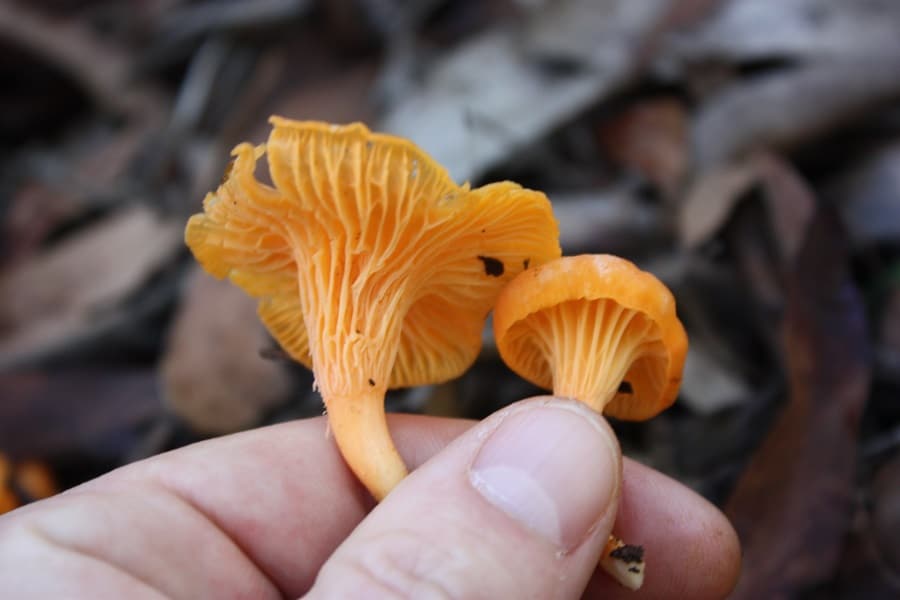
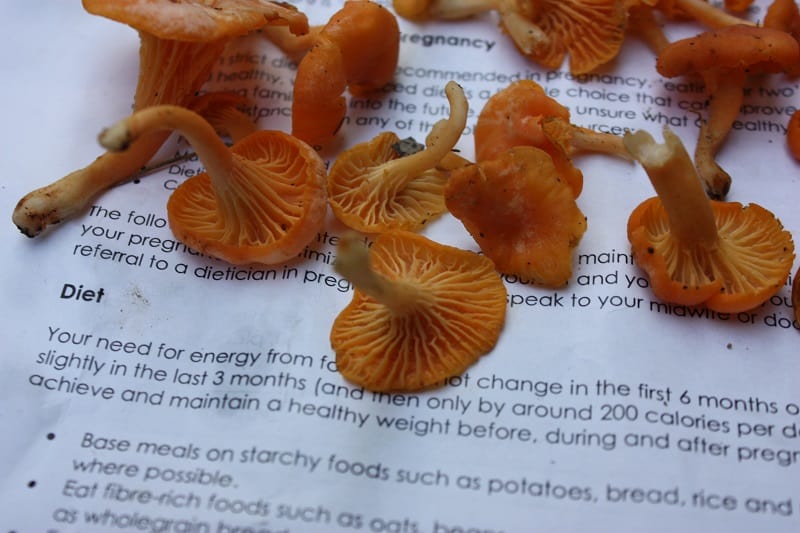
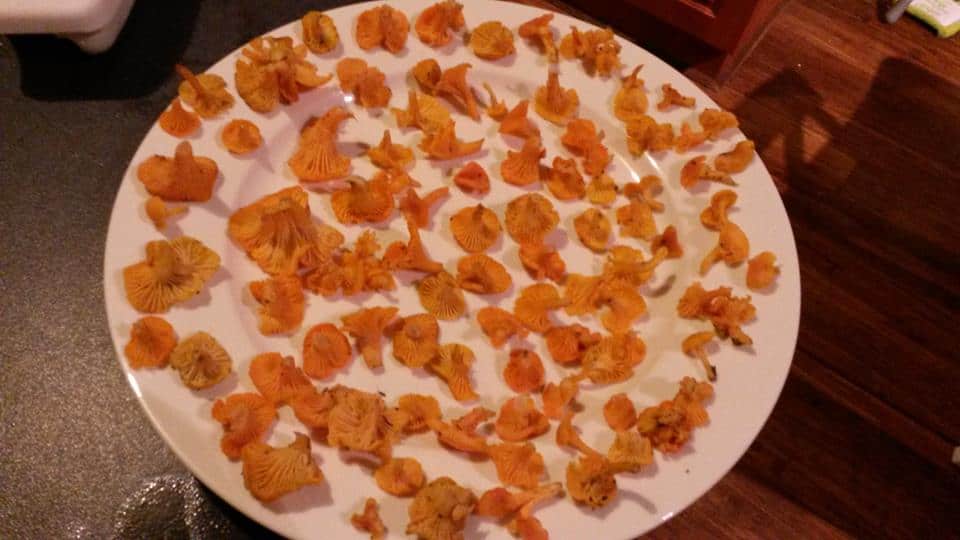
Cantharellus concinnus: The apricot chanterelle
Frequently Asked Questions
The edibility of Australian Cantharellus concinnus has not been officially established. While the concept of “concinnus” has been applied to potentially multiple species across Australia, Victorian specimens from the Dandenong Ranges generally lack the strong flavour of European and American chanterelles. FNQ varieties reportedly have much stronger flavour similar to overseas species.
Cantharellus concinnus typically occurs in Messmate Stringybark (Eucalyptus obliqua) forest and occasionally under Casuarina in the Dandenong Ranges and wider Yarra Ranges. A separate, potentially new chanterelle species has also been found under Oak and Chestnut trees in the Dandenongs. FNQ chanterelles grow under different host trees in tropical rainforest environments.
Multiple chanterelle species exist in Australia, though taxonomy is still evolving. Known species include Cantharellus concinnus (the most common Victorian species), an unnamed FNQ tropical chanterelle, and a recently discovered species in the Dandenong Ranges growing under Oak/Chestnut that DNA places between Cantharellus minor and Cantharellus albus. The concept of “concinnus” itself may encompass multiple distinct species across different Australian states.
Do chanterelle mushrooms grow wild in far north Queensland tropical areas.
Yes a species does grow up there in the rainforest around Kuranda in February. I am told they are similar in flavour to the European varieties. If you find any please send me some pictures 🙂
Is it possible to find a starter kit for Chanterelle’s? I haven’t seen these in any of the local growers markets I’ve been to in VIC or NSW.
Hi there. Unfortunately because chanterelles are mycorrhizal they cannot be cultivated easily and it is very hard to do it. I believe we are the only vendors that commonly find native chanterelles.
I think I have found some Cantharellus concinnus up in the bush were I grow. Are they edible? They smell like apricots and are quite small, if that helps at all. Thanks
Hi – nice find. Do you have a picture? Cleland the pioneer Australian mycologist used to eat them. They taste bland at times however.
Yes I have some good photos, how would you like me to send them? By email? Or you could see them at.
https://goo.gl/WDy4gF
Hi looks like concinnus. As far as I am aware all chant species are considered edible. Certainly Acclaimed mycologist Cleland reported that he ate them. I personally found them to be quite bland and certainly not up there with the European or American varieties.
I sautéed them on a high heat this morning with garlic, butter, olive oil salt+pepper and thyme and had them with some toast. They were quite tasty I found bit I have not tried any other Chanterelle’s so I cannot compare. I might go out and get some more though now that I have eaten them. Thankyou for your help 🙂
Excellent to hear and glad you enjoyed them. Some collections seem to have a stronger apricot smell than others and I wonder if this also represents variations in strength of flavour?
Do you sell these fabulous mushrooms, that I know so well from Europe?
Hi Ted there is a possibility we may look at that in the future. Probably not the southern variety but the northern QLD variety if we can source them on private property and they do turn out to be a species we can identify as edible (we suspect those were a species also found in the USA).
I think ive found some of these, but i am a total novice fungi fancier so would like some help to id. I have some photos, can you help? Jess
Sure no problem
5
These are the most popular in Eastern Europe My absolute favourite, just add a bit of salt and butter yummy or marinate in vinegar
Does anyone knows is it possible to find these in other states in AU? Im in WA but I don’t wanna believe something grows in this soil here lol
Hi – yes there are actually chants around WA at least in the south which are also concinnus. The better flavoured chants in Australia are the tropical species.
How common are they in Victoria? Is there a certain type of year and what are the common habitats?
Hi – Concinnus is more common in Tasmania than Victoria. It also occurs in WA. NSW and QLD get more interesting and diverse chanterelle species.
These fruit in May/June under Messmate and Casuarina
Austria where I lived we found chanterelles ( eierschwammerln). In all kinds of soil. The button shaped ones in a pine like forest. The bigger flashier ones in grassy Forrest’s even on the side of the road . Would like to get them in WA
You definitely get pink to orange chanterelles in WA – Cantharellus concinnus – under Jarra and various Eucalyptus species. sadly however they are generally regarded as tasteless.
Hi, I see from a previous post you say chants grow in far north Queensland. Do you know which tree species they grow around up here? Thanks, Brendan
HI there – there are several chant species and several apparent host trees. The big and very tasty FNQ chants were found under an Idiospermum tree. But there are other host species with red and other chanterelles up that way.
I found some on the northern beaches in Sydney. More yellow than the swedish variety
Im thinking that the NSW and QLD species are probably different to the ones that occur in Victoria and it seems Martin Martini is finding some really interesting chanterelles in Tasmania that may be a different species again.
Nice – did you take photos?
Hello I found these on East Coast NSW under gum trees, unattached to any logs or trunks. Are they chanterelle?
https://www.dropbox.com/s/sw2vaxn1fykl9qb/chant%201.JPG?dl=0
https://www.dropbox.com/s/ph1u9v8mfjl1hqt/chant%202.JPG?dl=0
Hello do you think this is safely Chanterelle? I found them in the leaf matter of eucalypts in East Coast NSW. They were not connected to any log or tree trunk or stump, stand alone. In the images I have torn them apart a little.
https://www.dropbox.com/s/sw2vaxn1fykl9qb/chant%201.JPG?dl=0
https://www.dropbox.com/s/ph1u9v8mfjl1hqt/chant%202.JPG?dl=0
Cannot mistake it,
decurrent gills, growing on the ground.
Important, not in clumps of more than 2-3, is that correct?
If so, good find.
I always say to now mush-roomers however, eat a small amount first
as some people can have a reaction regardless of edibility and wait 48hrs.
No symptoms, then it should be fine.
This above does NOT apply to any other species like the Amaita’s or Gallerina.
If however you are not sure, if in doubt, throw it out.
Good tips and advice!
There’s a whole ton of chanterelles growing near where i live, dunno if they’re the same type though. Could you look at some photos and tell me if you think they’re the same thing? I’m near Sydney for reference. Do i just email them?
I would like someone to take a closer look at the Cantharellus I often see in the wet season. They are FNQ so I think it is the one already mentioned. Could you email me so I have a mailing address for email to send on. I want to send images.
Thanks
Ron
Hi Ron – I would love to. Are they smooth chants? Pls email to [email protected]
Hi there, I’m currently working on a book about mushrooms in queensland. I found one that looks similar to a chant and I was wondering if you could help me out with id? I could email the photo?
sure please send to me or email.
I read this with interest. I tried to reply to a few of you but nothing happens; I am always in the tropical rainforests of north Qld around Cairns and tablelands and to the north photographing fungi. I see lots of Cantharellus, sometimes in big groups. They look so appealing and I have wondered about if they are edible. If they are, I will. Most of these here are a lovely yellow colour. I was wanting to send a couple of photos to Jonathan, but if anyone can identify the exact species please contact me. I would be happy to email photos to you. Ron
Hi Ron – I do apologise but we get so much spam that we generally dont check the messages as much.
Please email them to [email protected] – thanks!!
Got the message
Ron
Hi Ron – very sorry for the delay we have had some issues with passwords and then lockdowns making spare time minimal 🙂
They are very popular in Berlin, where I grew up. People sautee them with bacon. I prefer them in a creamy soup. In Berlin, they are called Pfifferlinge, probably due to their peppery flavour.
nice – yes the best chanterelles do have that awesome peppery flavour.
Hi
I have found some chanterelle mushrooms growing under a mango tree in my yard here in North Queensland. I haven’t seen them here for about 4 years.
Interesting. Remember their colour?
They are yellow, send me a link and i will email you pictures.