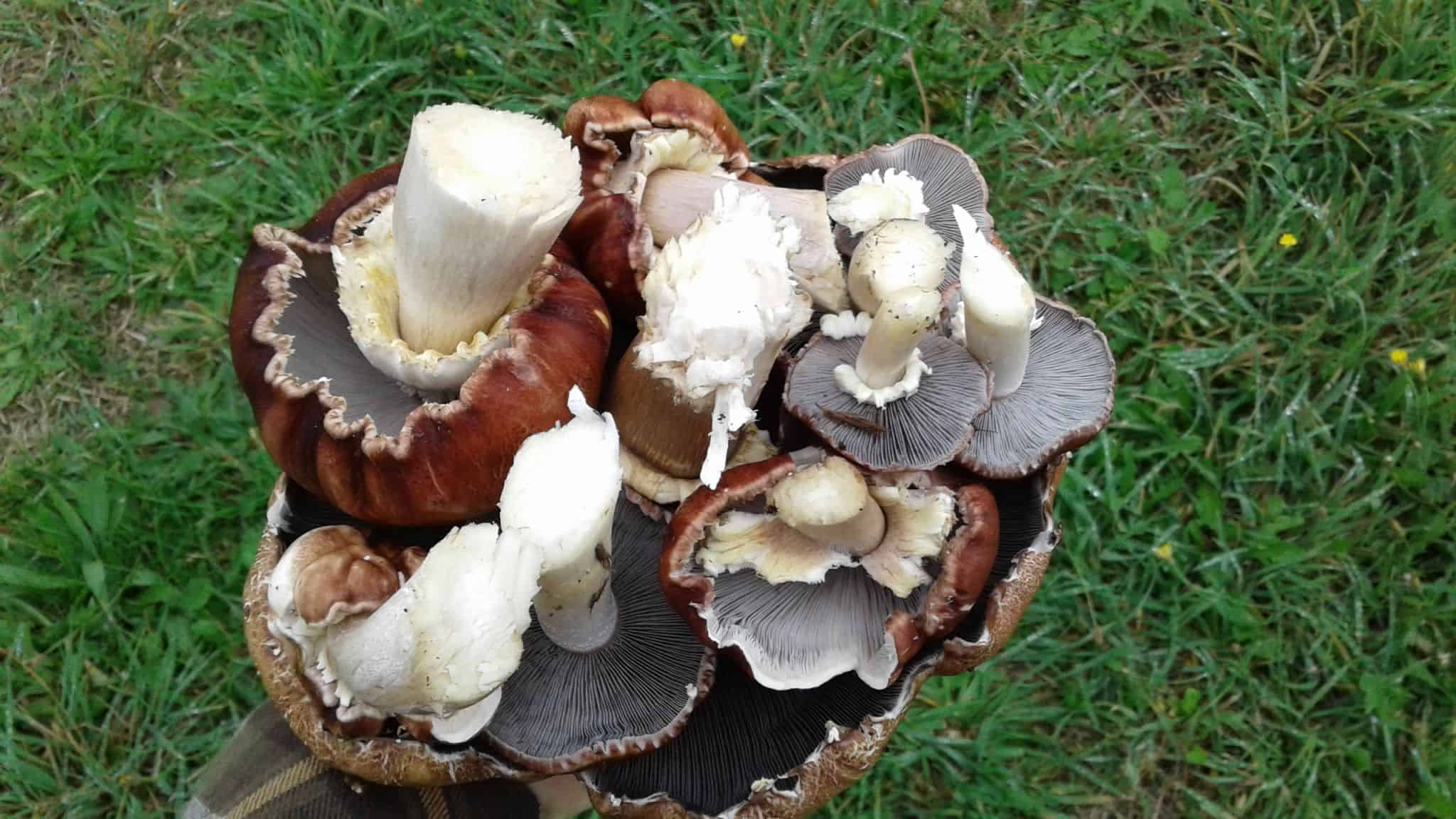
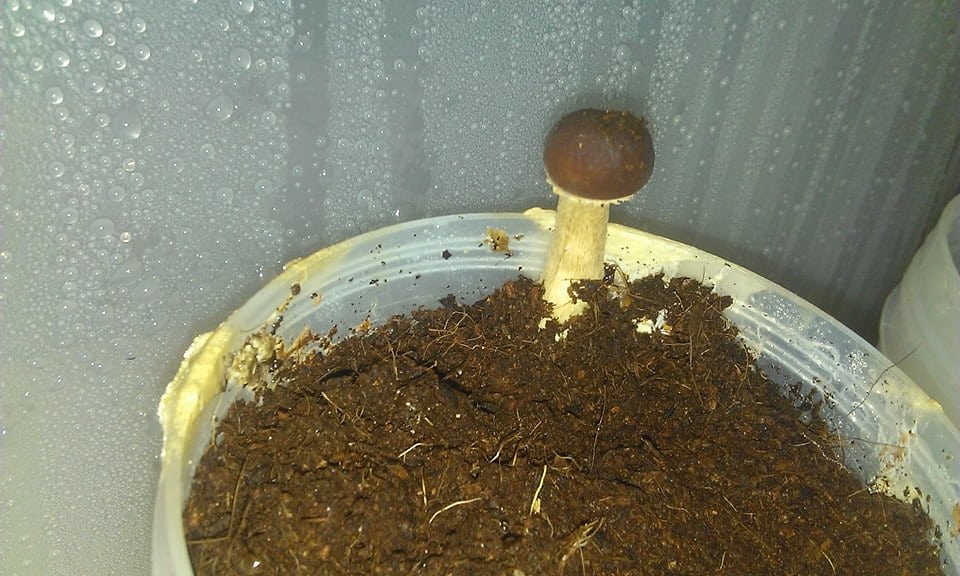
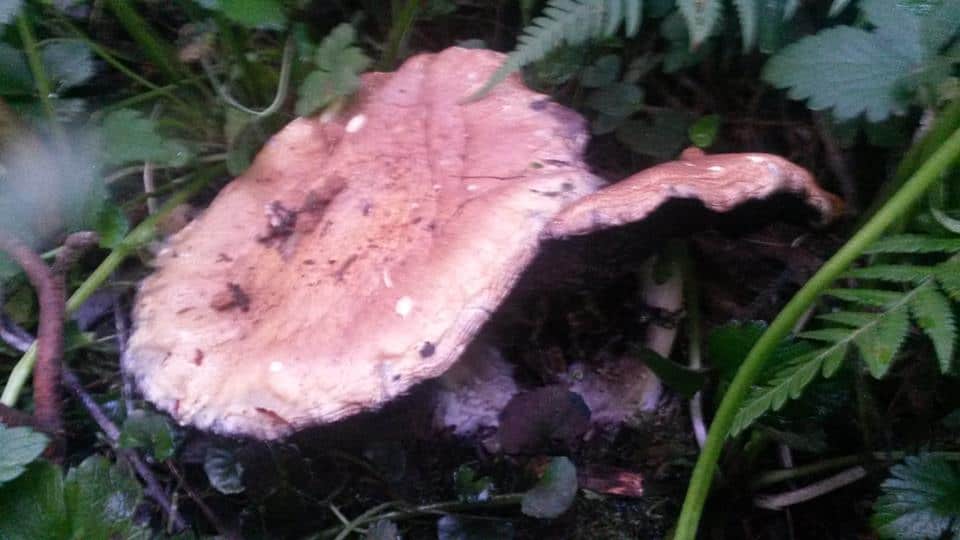
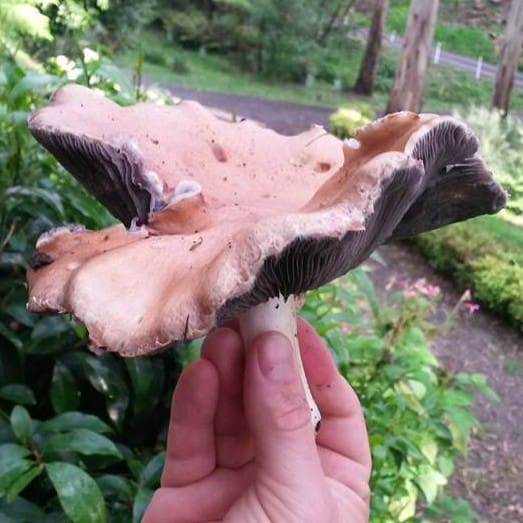
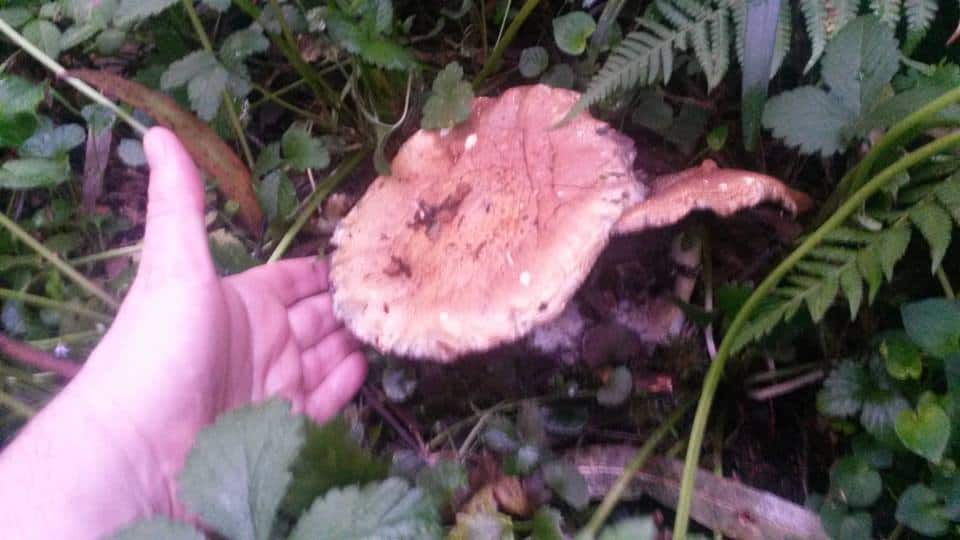
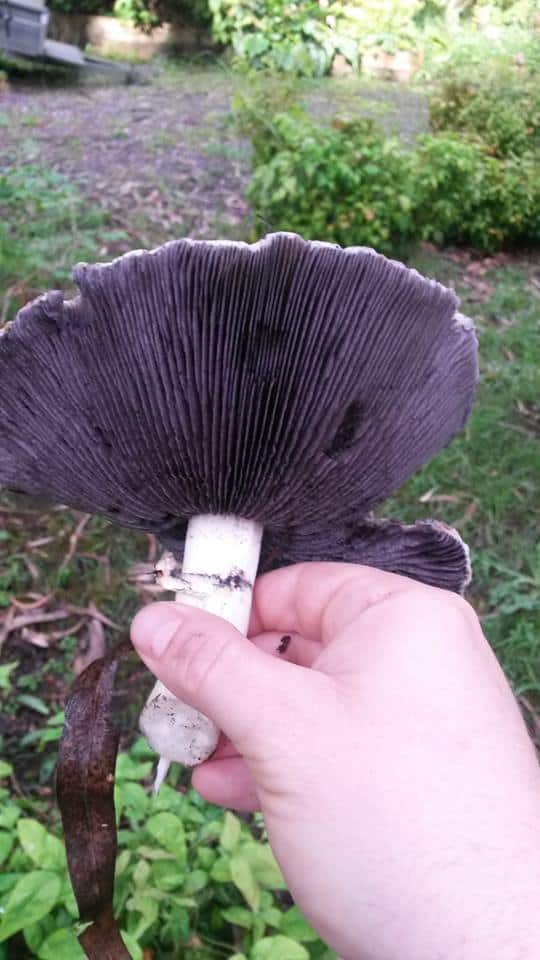
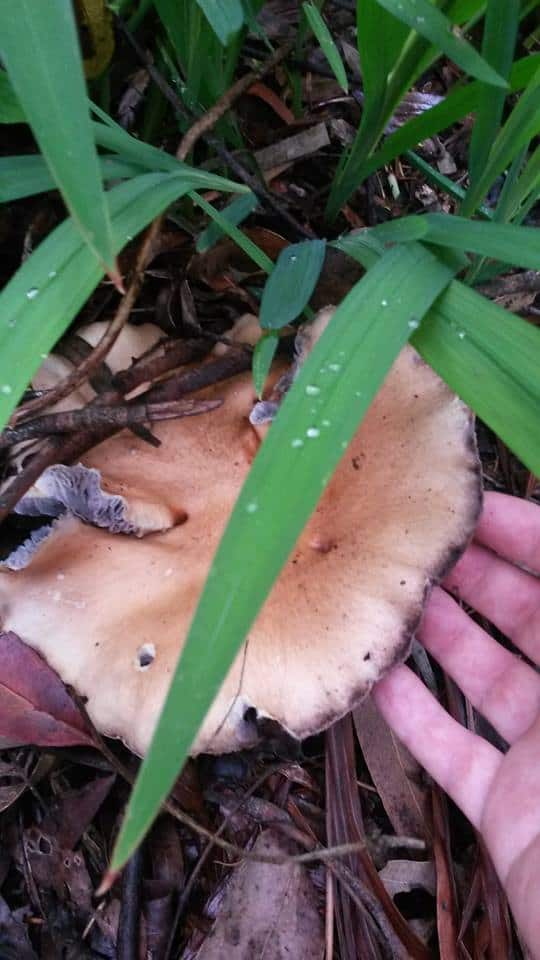
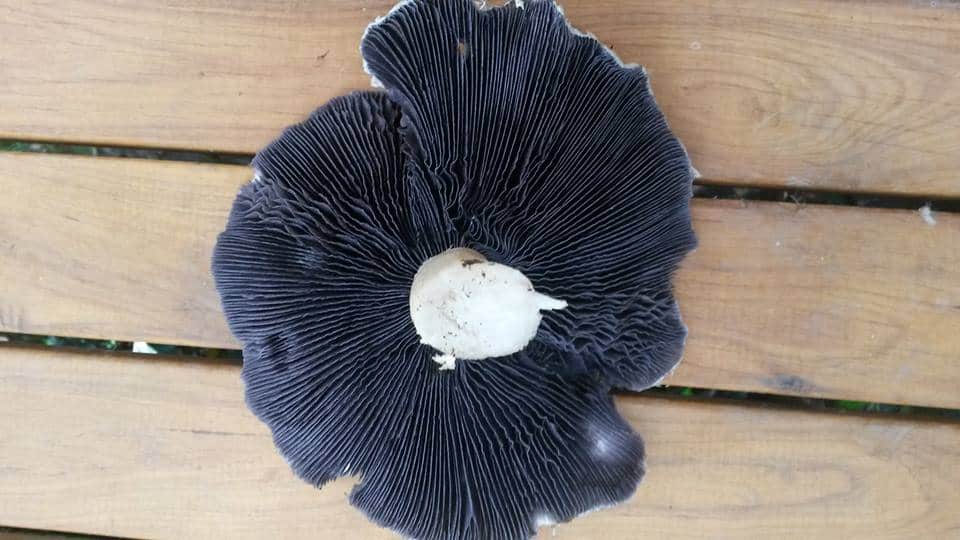
The ‘Pawtucket’ SRA strain:
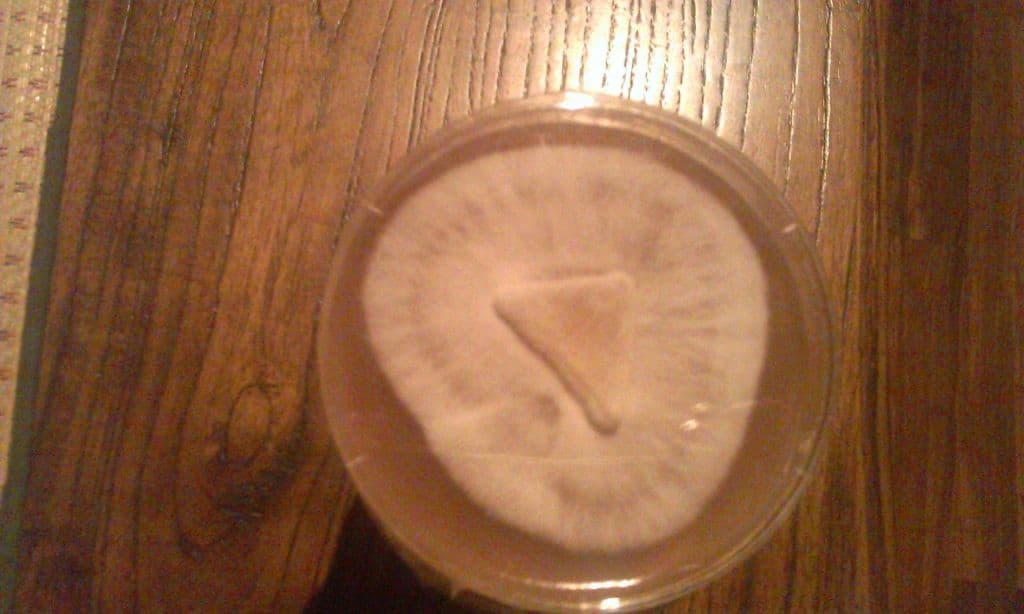
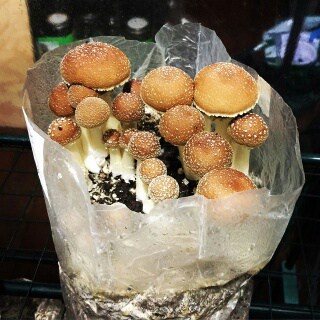
The ‘3’ SRA strain (fruited indoors above) on agar – superb rhizos:
Frequently Asked Questions
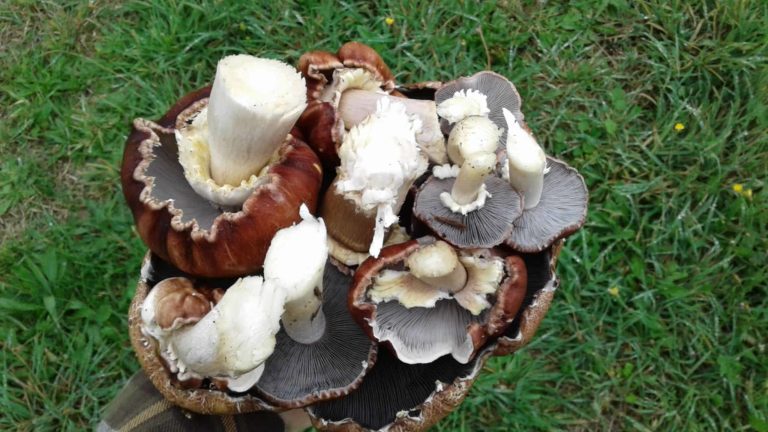
King Stropharia (Stropharia rugosoannulata), also known as Wine Cap, is a massive, meaty mushroom with a burgundy cap that grows on wood chip substrate. Yes, it grows well in Australia and is becoming increasingly common, particularly in NSW where it also occurs wild. In Victoria, the bed should be set up in autumn for spring fruiting when warmer weather arrives.
King Stropharia has an earthy flavour often compared to potatoes. It is amazingly versatile in the kitchen and fruit bodies can grow very large. The flavour intensity can vary – wild/feral specimens from the Victorian countryside have been noted as particularly flavoursome.
King Stropharia is an easy to moderate difficulty mushroom to cultivate. It grows on fresh hardwood chips or straw. In Victoria or Tasmania, set up the outdoor bed in autumn by mixing spawn through the substrate, then cover with a few inches of straw mulch. Fruit bodies should form in spring when temperatures rise. It can also be grown indoors. Cultivation complexity is rated easy to moderate.
Hi am interested in buying spores for the king stropfaria mushrooms so I can put it on wood chip sub base under a tree here in the Baw Baw shire council in Victoria. Do you sell it
Sure we sell cultures and bags but I could get some prints no problem.
Am in Australia and have what I think is this mushroom. Cap is cream, slightly rusty concave in the centre and is 15cm. Can’t seem to key it out in the book I have. Gills are pale grey, darkening later. Spore print is black (I thought there was a tint of violet but could be wrong). Ring is present but no volva. Stem is white and solid, very striated. Lovely smell, grown on decomposing wood chip. Want to eat it but not sure.
Hi Ingrid
You can send me some pics on facebook if you’d like – try Selby shrooms on there or Jonathan MacGibbon. The description sounds like STropharia rugusoannulata but Id have to see pics to confirm.
I live on the Atherton Tablelands in Nth Qld and have a pile of woodchips in my garden.
Can you advise if these mushrooms will grow in the temperate tropics?
Hi there – Calocybe indica, Stropharia rugosoannulata and the paddy straw would be worthwhile trials.
Hi
O was watching some you tube videos and he had a vegetable garden with some sort of mushroom coming up
And another video wine caps coming up they are both in the U.S.
I am in Albury NSW can I do this too in the garden
What could I try
Do I need to inoculate the spores and good Rich soil with sawdust, wood chips as a growing medium
Thanks for the info
Hi – King Stropharia would be ideal in those conditions. Unfortunately we no longer sell King Stropharia but our strain and other fruiting strains are available via other vendors in Australia. Best wishes.
I am interested in getting some Petri dish of wine caps.
When do you think new stock will come in?
Hi Peter – at this stage probably not for a while. We recommend aussimushroomsupplies
Hi, I want to start growing mushrooms outdoor on straw or woodchip beds. What easy growing mushrooms would you recommend for NSW climate in August? I have heard of Wine Cap or Oyster mushroom being easy for beginners. What do you recommend? Thanks, Fleur
wine caps would be perfect in NSW
would wine caps fruit in Darwin?
Sure – in fact they would love it there.
Hi am interested in buying spores for the king stropfaria mushrooms so I can put it on wood chip sub base in NSW.
When is the best time to grow these?
Can I order them and then wait till the right time for growing, or do I need to order them fresh right before trying to grow them?
Anytime in N NSW but we no longer sell cultures.